You brush twice a day, yet the yellow-brown crust near your gumline won’t budge, and your gums bleed every time you floss. Then your dentist says the word “scaling,” and a dozen worries follow. Will it hurt? Will it wear down my enamel? Will it leave gaps between my teeth? So, is teeth scaling good or bad?
The question matters more than most people realise. According to the World Health Organization, severe gum disease affects an estimated 1 billion people worldwide and is a major cause of tooth loss. Hardened tartar is one of the biggest drivers of that disease, and no toothbrush can remove it.
In this guide, we separate fact from fear. You’ll learn what scaling really does, its benefits and side effects, how painful it is, the different types, and how it compares with cleaning and whitening.
What Is Teeth Scaling?
Teeth scaling is a professional dental treatment that removes plaque, hardened tartar (calculus) and surface stains from your teeth, both above and below the gumline. A dentist or dental hygienist does it using specialised instruments, because tartar, once formed, is far too hard for a toothbrush or floss to remove.
Think of it as the difference between wiping a dirty plate and scraping off baked-on residue. Brushing handles the first. Scaling handles the second.
Plaque vs Tartar vs Stains: What Exactly Gets Removed?
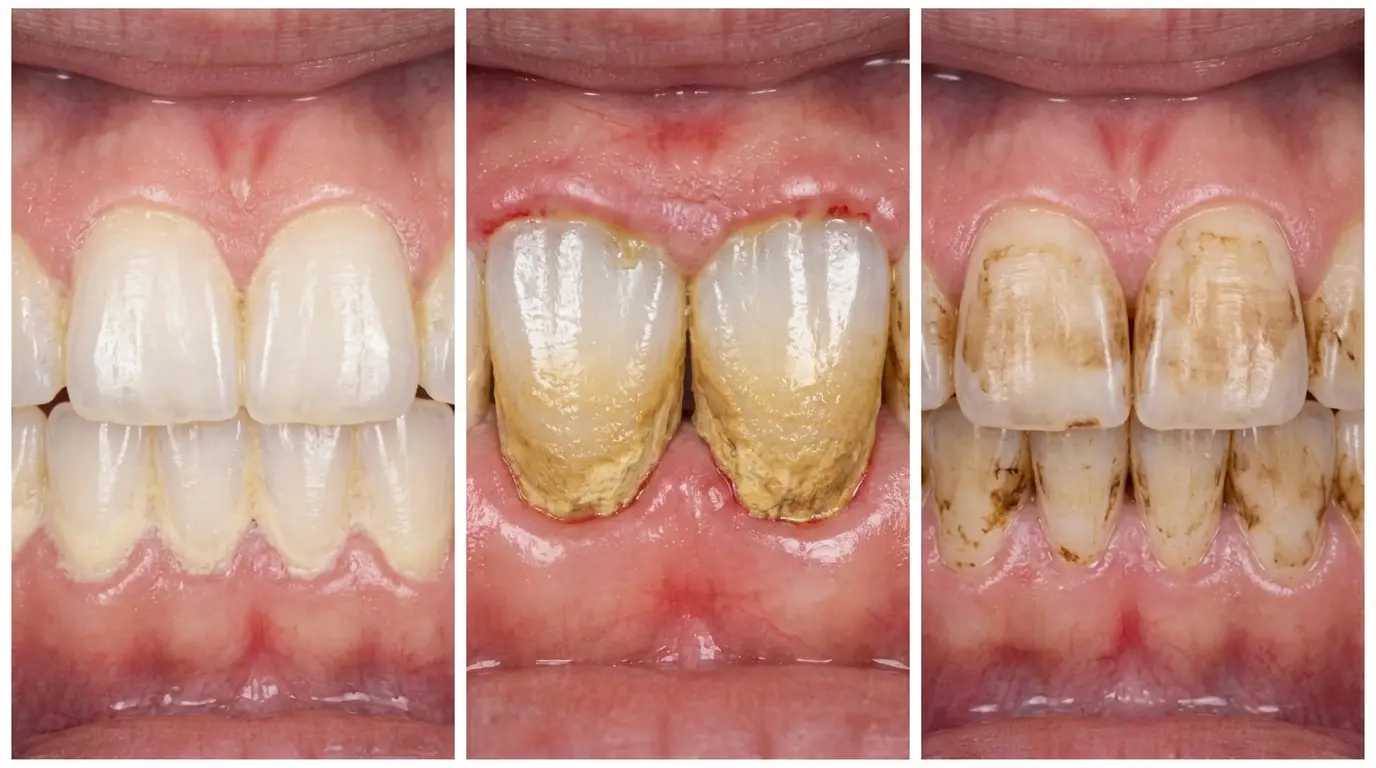
Many people use these three words interchangeably, but they are different problems.
| Plaque | Tartar (Calculus) | Stains | |
| What it is | Soft, sticky film of bacteria | Plaque that has hardened with minerals from saliva | Discolouration on the tooth surface |
| Colour | Colourless or pale yellow | Yellow, brown or even black | Yellow, brown or dark |
| Texture | Soft, fuzzy | Hard, rough, crusty | Smooth |
| Removed by brushing? | Yes | No | Partly |
| Needs scaling? | No | Yes | Often, along with polishing |
Common causes of stains include tea, coffee, smoking, and paan or gutka.
Why Brushing Alone Can’t Remove Tartar
Plaques start forming within hours of eating. If it isn’t cleaned away properly, minerals in your saliva can harden it into tartar within a matter of days. Once that happens, the problem changes in three ways:
- It bonds to the tooth. Tartar attaches firmly to enamel and root surfaces, so brushing can’t dislodge it.
- It’s rough and porous. Its uneven surface traps even more plaque, which creates a cycle of buildup.
- It irritates your gums. The bacteria living on tartar inflame the gum tissue, which leads to redness, swelling, bleeding and bad breath. Left untreated, this can progress from gingivitis to periodontitis.
That is why even people with good brushing habits can still develop tartar, especially along the lower front teeth and behind the upper back teeth, where saliva flow is highest.
Signs You Need Teeth Scaling
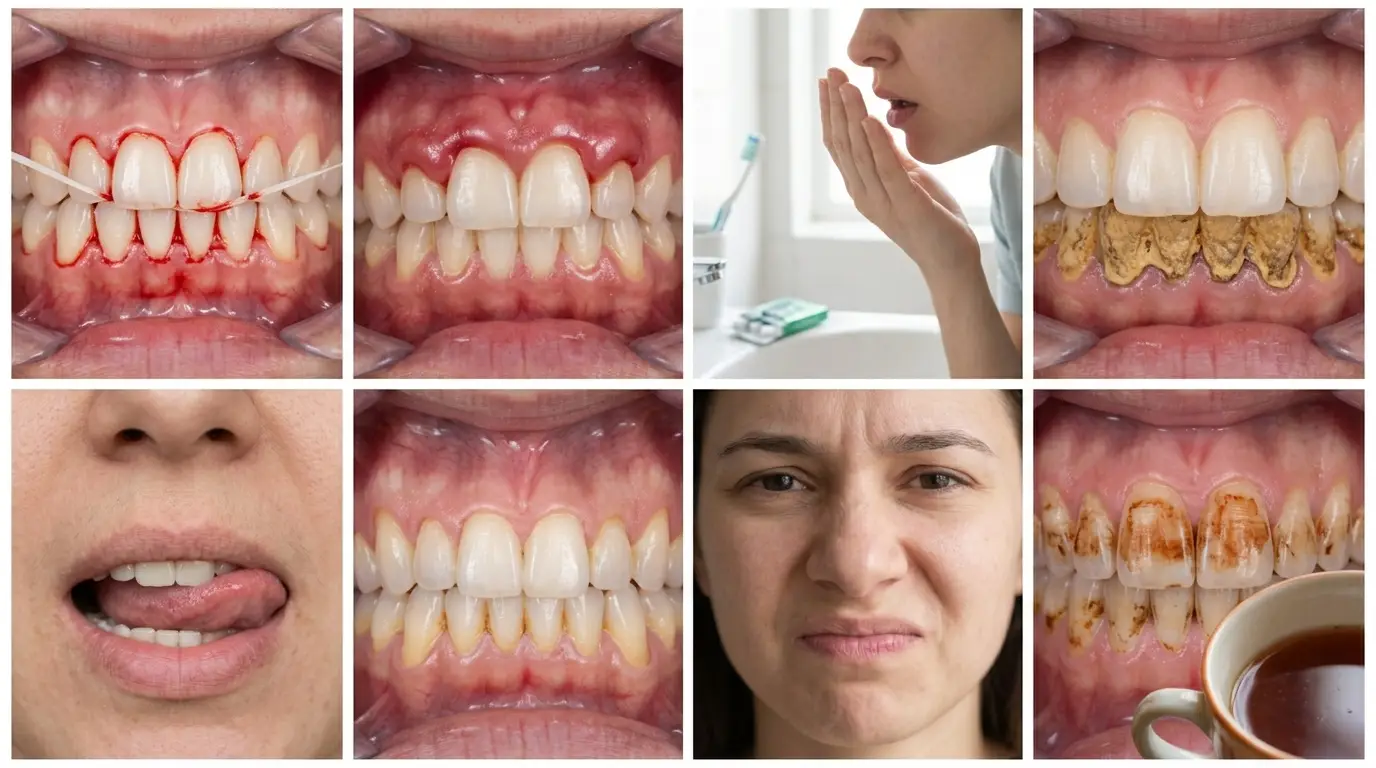
Tartar rarely hurts in the early stages, so many people don’t realise they have it until the gums start reacting. These are the most common signs that it’s time to see a dentist for scaling.
- Bleeding gums: Gums that bleed when you brush or floss are one of the earliest signs of tartar irritating the gum tissue. Healthy gums shouldn’t bleed.
- Red, swollen or tender gums: Gums that look puffy, dark red or feel sore are inflamed, often because plaque and tartar are building up along the gumline.
- Persistent bad breath: If bad breath keeps returning even after brushing, mouthwash or mints, bacteria trapped in tartar may be the cause.
- Yellow, brown or dark deposits on teeth: Hard, crusty buildup near the gumline, especially on the lower front teeth and behind the upper back teeth, is usually tartar. It cannot be brushed off.
- Rough feeling on your teeth: If you run your tongue over your teeth and feel a gritty or uneven surface that doesn’t go away after brushing, tartar is likely present.
- Receding gums: Gums pulling away from the teeth can make teeth look longer and expose the roots. Tartar and gum inflammation are common contributors.
- A bad taste in the mouth: A constant sour or metallic taste can come from bacteria and inflamed gums.
- Visible stains from tea, coffee, smoking, paan or gutka: Regular use of these leaves stubborn stains and speeds up tartar formation, so people who use them often need scaling more frequently.
How Often Is Scaling Recommended?
Most people benefit from a professional scaling every 6 to 12 months. Your dentist may suggest shorter gaps if you smoke, chew paan or gutka, have diabetes, or already show signs of gum disease.
If you notice more than one of these signs, don’t wait for pain. Gum disease often progresses quietly, and early scaling is the simplest way to stop it.
Is Teeth Scaling Good for You? Benefits & Advantages
Yes, when it is done by a qualified dentist and when your teeth actually need it, teeth scaling is good for your oral health. It removes the one thing daily brushing can’t, which is hardened tartar, and that has several real benefits.
Benefits of Teeth Scaling
- Prevents and reverses early gum disease: Removing tartar takes away the source of gum irritation. In the early stage (gingivitis), gums often return to a healthy state after scaling, along with good daily cleaning at home.
- Reduces gum bleeding and swelling: Once the bacteria-filled tartar is gone, inflamed gums can calm down and become firmer and less prone to bleeding.
- Freshens breath: Tartar traps bacteria that produce bad odours. Removing it gets rid of a common cause of persistent bad breath.
- Helps protect against tooth loss: Untreated tartar can lead to advanced gum disease (periodontitis), which damages the bone that holds teeth in place. Regular scaling lowers that risk.
- Gives a cleaner, brighter-looking smile: Scaling removes yellow and brown deposits and surface stains, so teeth look cleaner right away.
- Let your dentist spot problems early: Clean teeth are easier to examine, so cavities, worn fillings and early gum problems are more likely to be found before they become painful or expensive.
- Supports your overall health: Research has linked gum disease with conditions such as diabetes and heart disease. Keeping your gums healthy is one part of looking after your general health, though scaling alone is not a treatment for those conditions.
Is Scaling Good or Bad? The Verdict
Scaling is good when:
- there is tartar or gum inflammation that needs to be removed,
- it is done by a qualified dentist or hygienist with properly sterilised instruments,
- It is done at sensible intervals as advised by your dentist.
It can cause problems only when it is done unnecessarily, too aggressively, or by someone untrained. We cover the possible side effects in the next section.
Disadvantages & Side Effects of Teeth Scaling
Teeth scaling is a safe and routine treatment, but like most dental procedures it can cause some temporary side effects. Most are mild and settle on their own within a few days. Serious problems are rare and usually linked to unnecessary, overly aggressive or unqualified treatment.
Common Side Effects of Teeth Scaling
- Tooth sensitivity: Once tartar is removed, parts of the tooth surface and root that were covered become exposed, so teeth may feel sensitive to hot, cold or sweet things for a few days.
- Mild gum bleeding and soreness: If your gums were inflamed before scaling, they may bleed a little and feel tender afterwards. This usually improves as the gums heal.
- Gaps between teeth: Tartar can fill the spaces between teeth, so after it is removed you may notice gaps or feel that your teeth have become “loose.” The gaps were already there, hidden under the buildup. They are not new damage.
- Gum swelling or temporary discomfort: Heavy tartar and inflamed gums can make the treatment area feel sore for a short time.
Can Scaling Damage Your Teeth?
When it is performed properly, scaling does not damage healthy enamel. Problems can occur in these situations:
- Over-aggressive or unnecessary scaling: Excessive force or repeated scaling when there is little tartar can irritate the gums and, in rare cases, wear the tooth surface.
- Unqualified practitioners: Poor technique or the wrong instruments can injure the gums or scratch the tooth surface.
- Unsterilised instruments: Instruments that are not properly sterilised carry a risk of infection.
This is why choosing a qualified dentist or hygienist matters more than the type of scaling used.
Myth vs Fact: “Scaling Weakens Teeth”
- Myth: Scaling makes teeth weak and causes them to loosen.
- Fact: Scaling doesn’t weaken healthy teeth. Teeth that feel loose afterwards are usually already affected by gum disease, and the tartar was temporarily holding them in place.
Who Should Be Careful?
Tell your dentist before scaling if you have:
- loose teeth or advanced gum disease,
- a heart condition or artificial heart valve,
- a bleeding disorder, or you take blood thinners,
- diabetes or a weakened immune system,
- a pacemaker, since some ultrasonic scalers may not be suitable.
Your dentist can then adjust the approach or take extra precautions.
Is Teeth Scaling Painful?

For most people, teeth scaling is not painful. It is usually described as uncomfortable rather than painful, and many people feel only mild pressure, vibration or a scraping sensation. How much you feel depends on the amount of tartar, the health of your gums and how sensitive your teeth are.
What Does Scaling Feel Like?
Most patients notice:
- a vibration or tickling feeling from the scaler,
- light scraping against the tooth surface,
- a cool sensation from the water spray,
- mild tingling or pressure near the gums.
When Can Scaling Feel More Uncomfortable?
Some people feel more discomfort than others, especially if they have:
- heavy tartar buildup, which takes longer to remove,
- inflamed or bleeding gums, which are tender to touch,
- sensitive teeth or exposed roots, which react to cold water and vibration,
- tartar below the gumline, where the gum tissue is more delicate,
- dental anxiety, which makes the body more sensitive to sensation.
If you have not had scaling for years, the first session may feel more uncomfortable than later ones, because the gums are healthier once the tartar is gone.
How Dentists Keep Scaling Comfortable
You don’t have to simply put up with pain. Dentists have several ways to make scaling more comfortable:
- Numbing gel or local anaesthesia for sensitive areas or deeper cleaning.
- Ultrasonic or piezoelectric scalers, which use gentle vibration and water and need less pressure than hand scraping.
- Gentle technique and breaks, so you can rest if you feel discomfort.
- Sensitivity-friendly water temperature or desensitising agents for people with very sensitive teeth.
If something hurts, tell your dentist straight away. A good dentist will adjust the method, take a break or use numbing instead of asking you to bear it.
Is It Normal to Have Pain After Scaling?
Mild sensitivity or gum tenderness for a day or two is common. Severe, worsening or long-lasting pain is not normal, and you should contact your dentist.
Types of Teeth Scaling
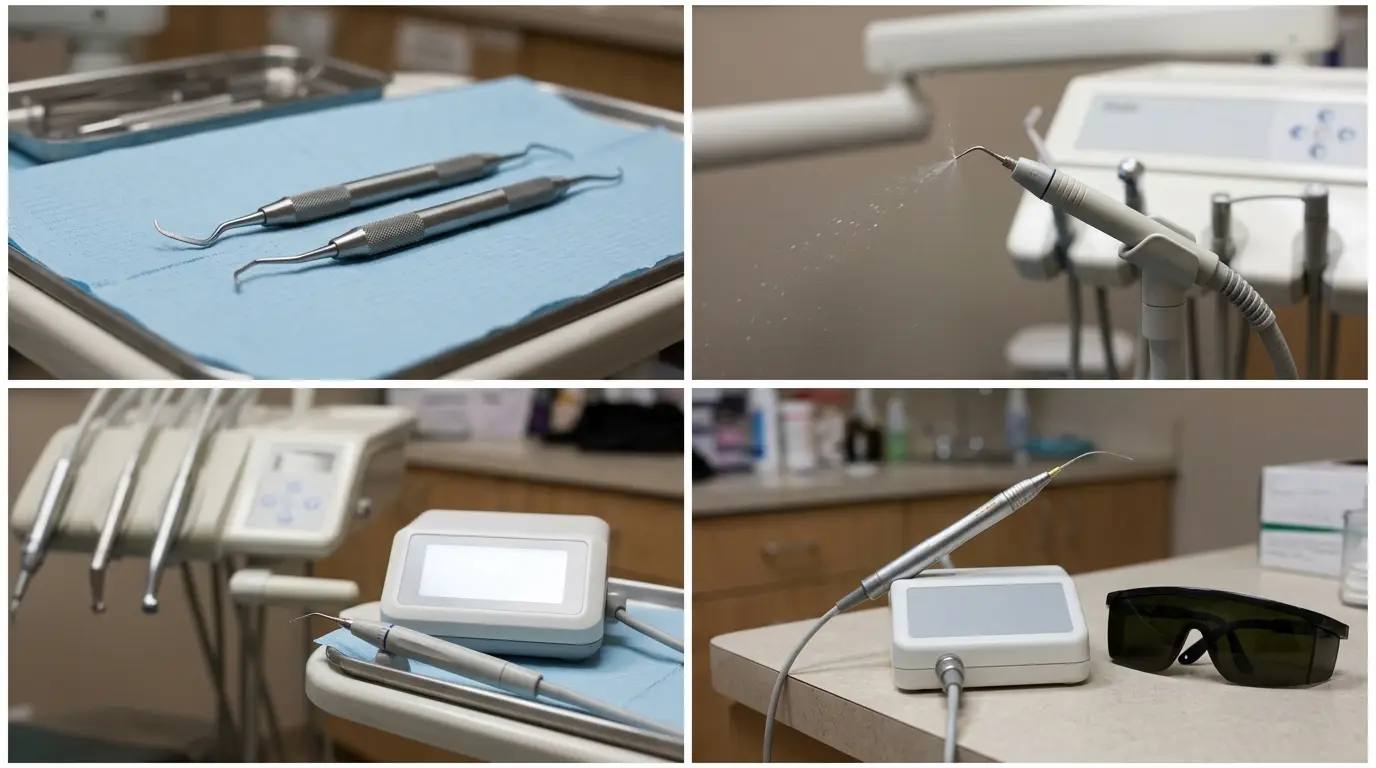
There are four main types of teeth scaling. Your dentist chooses the method based on how much tartar you have, how healthy your gums are and how sensitive your teeth are. In many cases, more than one method is used in the same visit.
1. Manual (Hand) Scaling
This is the traditional method. The dentist uses hand-held instruments such as sickle scalers and curettes to scrape tartar off the tooth surface and from below the gumline.
- Pros: It gives the dentist a close feel of the tooth surface, works well for small or stubborn deposits and is useful in tight spaces.
- Cons: It is slower, depends heavily on the dentist’s skill and can feel more uncomfortable when there is heavy tartar.
2. Ultrasonic Scaling
An ultrasonic scaler uses high-frequency vibrations and a water spray to break tartar away from the teeth. It is the most widely used method today.
- Pros: It is faster, needs less pressure and the water flushes out bacteria and debris.
- Cons: The vibration and noise can bother some people, and it may not suit patients with certain medical devices. Your dentist will advise you on this.
3. Piezoelectric Scaling
This is a type of ultrasonic scaling that uses a different technology to produce vibration. The tip moves in a smaller, more controlled pattern, which makes it gentler on the teeth and gums.
- Pros: It is comfortable, generates less heat and works well for people with sensitive teeth or gums.
- Cons: It may be slower on very heavy tartar, and not every clinic has the equipment.
4. Laser-Assisted Scaling
Dental lasers are a newer option, mainly used to treat gum tissue and reduce bacteria around the teeth. They are generally used alongside conventional scaling rather than replacing it, and research on their long-term benefit is still developing.
- Pros: It can be gentle on the gums and may help in selected gum disease cases.
- Cons: It is not available everywhere and is not the standard method for routine tartar removal.
Which Type Is Best for You?
No single method is best for everyone. Light tartar may be handled with ultrasonic scaling alone, while sensitive teeth may do better with piezoelectric scaling, and small stubborn deposits are often finished by hand. What matters most is that the treatment is done by a qualified dentist using properly sterilised instruments.
Teeth Scaling Instruments (What Dentists Use)
Dentists use a small set of specialised instruments for scaling. Some are hand-held and some are powered, and each is designed to reach a particular part of the tooth. Here are the main ones.
Hand Scalers
- Sickle scaler: It has a pointed tip and is mainly used to remove tartar above the gumline, especially between the teeth.
- Curettes (including Gracey curettes): They have a rounded tip and are used to clean tartar below the gumline and to smooth root surfaces. Gracey curettes are designed for specific areas of the mouth, so dentists use different ones for different teeth.
- Hoe scaler: It has a flat blade and is used to remove thick, hard tartar from the tooth surface.
- Chisel scaler: It is used for tartar between the front teeth.
Ultrasonic Scaler and Tips
An ultrasonic scaler is a powered handpiece with a thin metal tip that vibrates at high frequency and sprays water. The vibration breaks tartar away, and the water cools the tip and flushes out debris. Different tips are used for heavy tartar, fine cleaning and deeper areas along the gumline.
Piezo Scaler
A piezo scaler works on the same principle as an ultrasonic scaler but vibrates in a smaller, more controlled motion. Its tips are often thinner and gentler, which makes it a popular choice for sensitive teeth and gums.
Periodontal Probe and Dental Explorer
These are checking instruments rather than scalers. The probe measures the depth of the gap between the tooth and gum, which helps the dentist judge gum health. The explorer has a fine, sharp tip that helps detect tartar and rough spots on the tooth.
Mouth Mirror and Suction
The mouth mirror lets the dentist see the back and inner surfaces of the teeth. Suction (a saliva ejector) removes water, saliva and loosened debris so the area stays clear and comfortable for you.
Sterilisation: What to Look for in a Clinic
Scaling instruments touch gum tissue and can cause bleeding, so hygiene matters. A good clinic should:
- sterilise reusable instruments in an autoclave and keep them in sealed sterilisation pouches,
- use fresh gloves, a mask and a clean barrier for every patient,
- use single-use items (cups, tips or covers where applicable) once and discard them.
Don’t hesitate to ask your dentist how the instruments are sterilised. A professional dental clinic will be happy to explain.
Difference Between Teeth Cleaning and Scaling
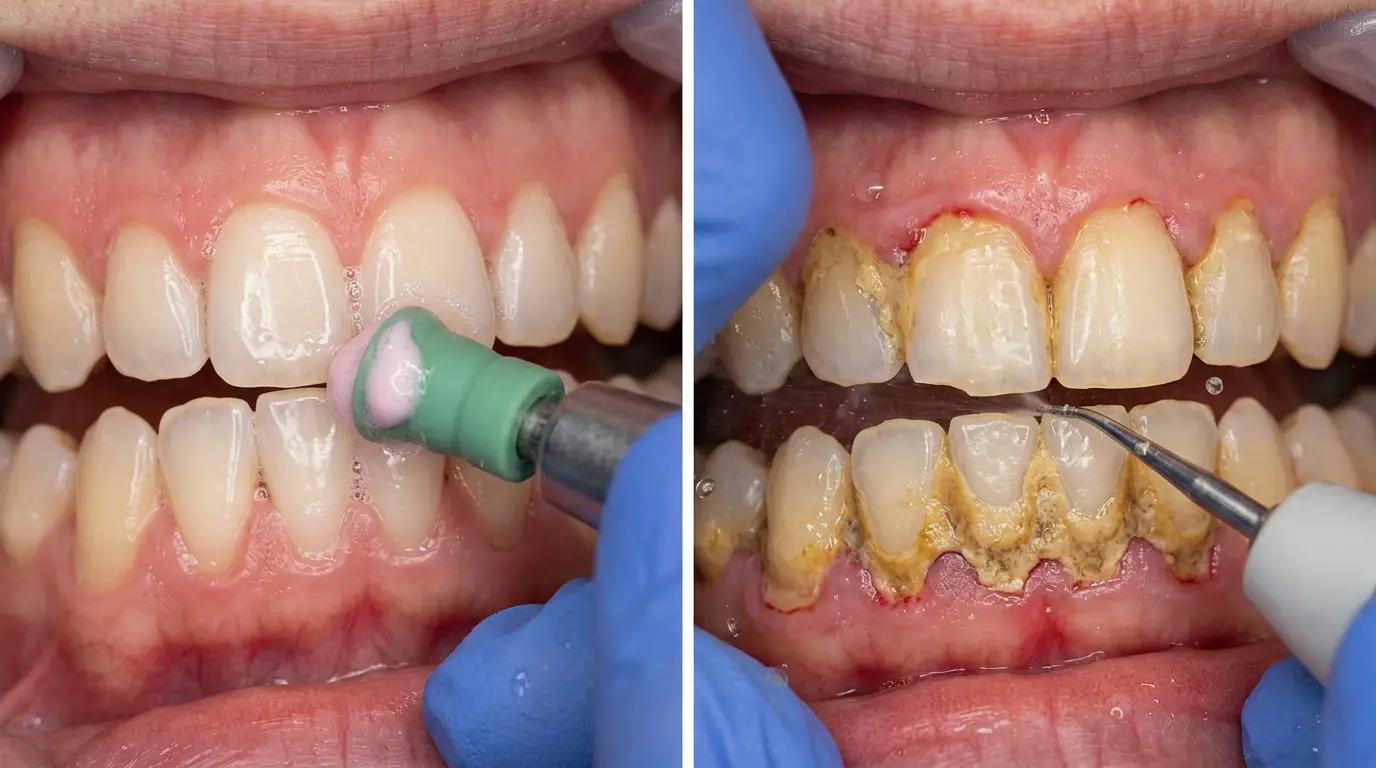
The main difference between teeth cleaning and teeth scaling is depth and purpose. Cleaning is a routine, preventive treatment for healthy mouths, while scaling is a deeper treatment that removes hardened tartar and treats the gum irritation it causes.
| Factor | Teeth Cleaning | Teeth Scaling |
| Purpose | Prevents problems and maintains oral health | Treats existing tartar buildup and early gum problems |
| What it removes | Light plaque and surface stains | Hard, stubborn tartar (calculus) |
| Depth | Visible tooth surface | Along and slightly below the gumline |
| Who needs it | People with healthy gums and little buildup | People with visible tartar, bleeding gums or early gum disease |
| Instruments | Light scalers and polishing tools | Hand scalers, curettes, ultrasonic or piezo scalers |
| Frequency | Routine maintenance | When tartar has built up, then at intervals your dentist advises |
Understanding the Difference in Detail
Purpose. Teeth cleaning is about prevention. If your gums are healthy and you only have a small amount of plaque or light staining, a routine cleaning keeps your mouth in good condition and stops problems before they start. Scaling is about treatment. It is needed when plaque has already hardened into tartar and has started to irritate the gums, which is something cleaning alone can’t fix.
What gets removed. Plaque and light surface stains are soft enough to be removed during a routine cleaning. Tartar is different. Once plaque hardens, it bonds firmly to the tooth and can only be removed with scaling instruments. This is the biggest practical difference between the two.
How deep the treatment goes. Cleaning mostly works on the visible part of the tooth. Scaling goes further, removing deposits along the gumline and slightly below it, where bacteria collect and gum disease begins. This is why scaling is the right choice for people with bleeding or swollen gums.
Who needs which. If your gums are healthy and you have no visible tartar, regular cleaning is usually enough. If you notice hard yellow or brown deposits, bleeding gums, or bad breath that doesn’t go away, you most likely need scaling.
Where root planing fits in. If gum disease has progressed and tartar has settled deep under the gums, scaling alone may not be enough. Dentists then add root planing, which smooths the root surfaces so the gums can heal and reattach. This is often called deep cleaning, and it goes a step beyond scaling.
Your dentist can examine your gums and tell you which one you need.
Teeth Whitening vs Scaling
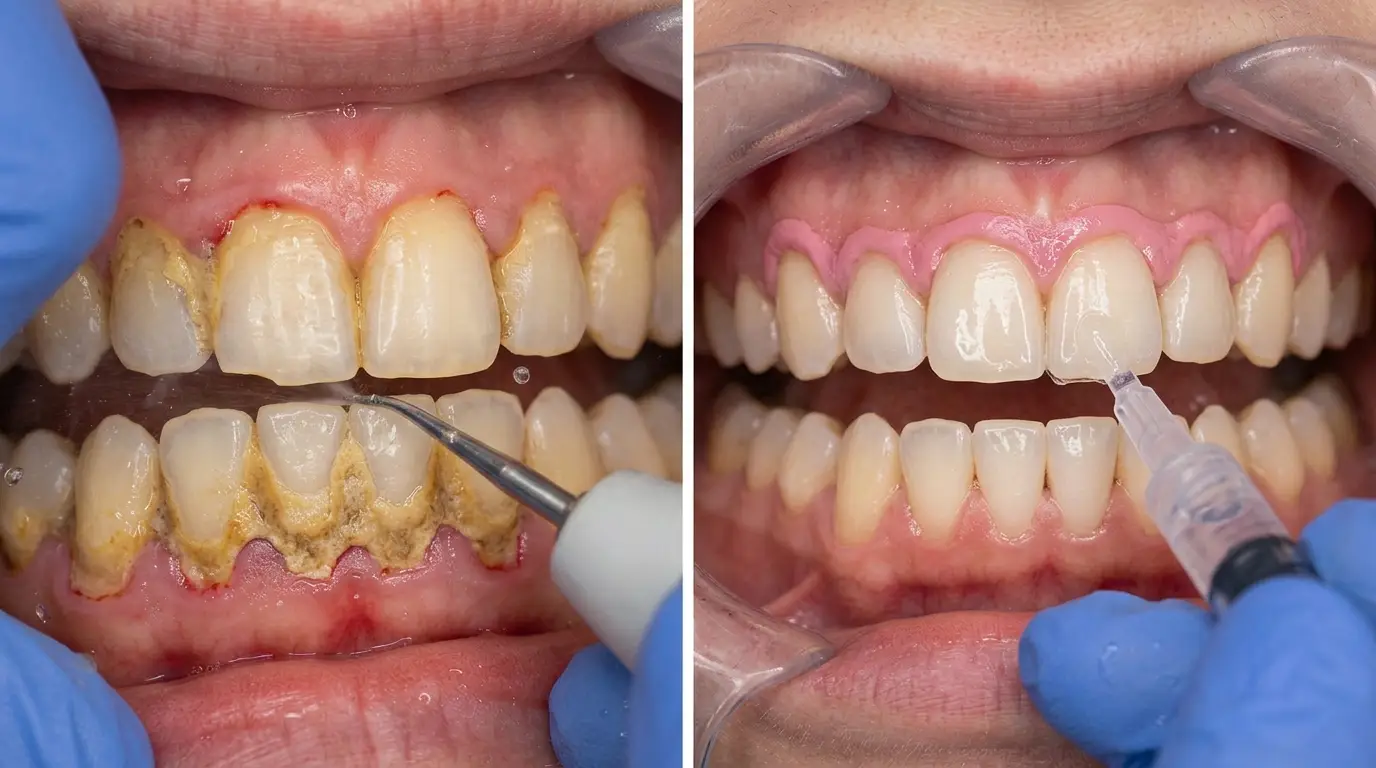
The main difference is what each treatment does. Scaling cleans the teeth by removing tartar and stains, while whitening changes the colour of the teeth to a lighter shade. Scaling can make teeth look brighter, but only whitening can make them lighter than their natural shade.
| Factor | Teeth Scaling | Teeth Whitening |
| Purpose | Removes tartar, plaque and surface stains | Lightens the natural shade of the teeth |
| How it works | Physically removes deposits from the tooth surface and gumline | Uses a bleaching agent to break down stains inside the enamel |
| Improves gum health | Yes | No |
| Treats tartar | Yes | No |
| Changes tooth colour | Only restores the natural colour hidden under deposits | Makes teeth lighter than their natural shade |
| Who needs it | People with tartar, bleeding gums or surface stains | People who want a lighter smile and already have clean, healthy teeth |
| Medical need | Yes, it protects gum health | No, it is cosmetic |
Understanding the Difference in Detail
Purpose. Scaling is a health treatment. It removes the tartar that irritates your gums and leads to bleeding, bad breath and gum disease. Whitening is a cosmetic treatment. It doesn’t clean tartar or improve gum health, and its only goal is a brighter smile.
How they work. Scaling removes deposits sitting on the outside of the tooth and along the gumline. Whitening uses a bleaching agent that penetrates the enamel and breaks down deep-set stains. Because of this, whitening cannot remove tartar, and scaling cannot bleach the tooth.
Which stains each one handles. Surface stains from tea, coffee, smoking, paan or gutka are removed by scaling and polishing. Deeper stains inside the tooth, or natural yellowing that comes with age, need whitening.
Can Scaling Whiten Teeth?
Scaling can make your teeth look noticeably brighter, but it does not whiten them. It removes the yellow and brown deposits covering the tooth, which reveals your natural shade underneath. It does not change that shade. If you want teeth lighter than your natural colour, you need whitening.
Which Should Come First?
Scaling should come first. Whitening works best on clean teeth, and tartar blocks the whitening agent from reaching the enamel evenly. Whitening over tartar can leave uneven results. Whitening is also not advised if you have active gum inflammation, because bleaching agents can irritate sore gums. Scaling helps get your gums healthy enough for whitening.
Your dentist can tell you whether you need scaling, whitening or both, and the best order for your teeth.
How to Prevent Tartar Buildup Between Visits
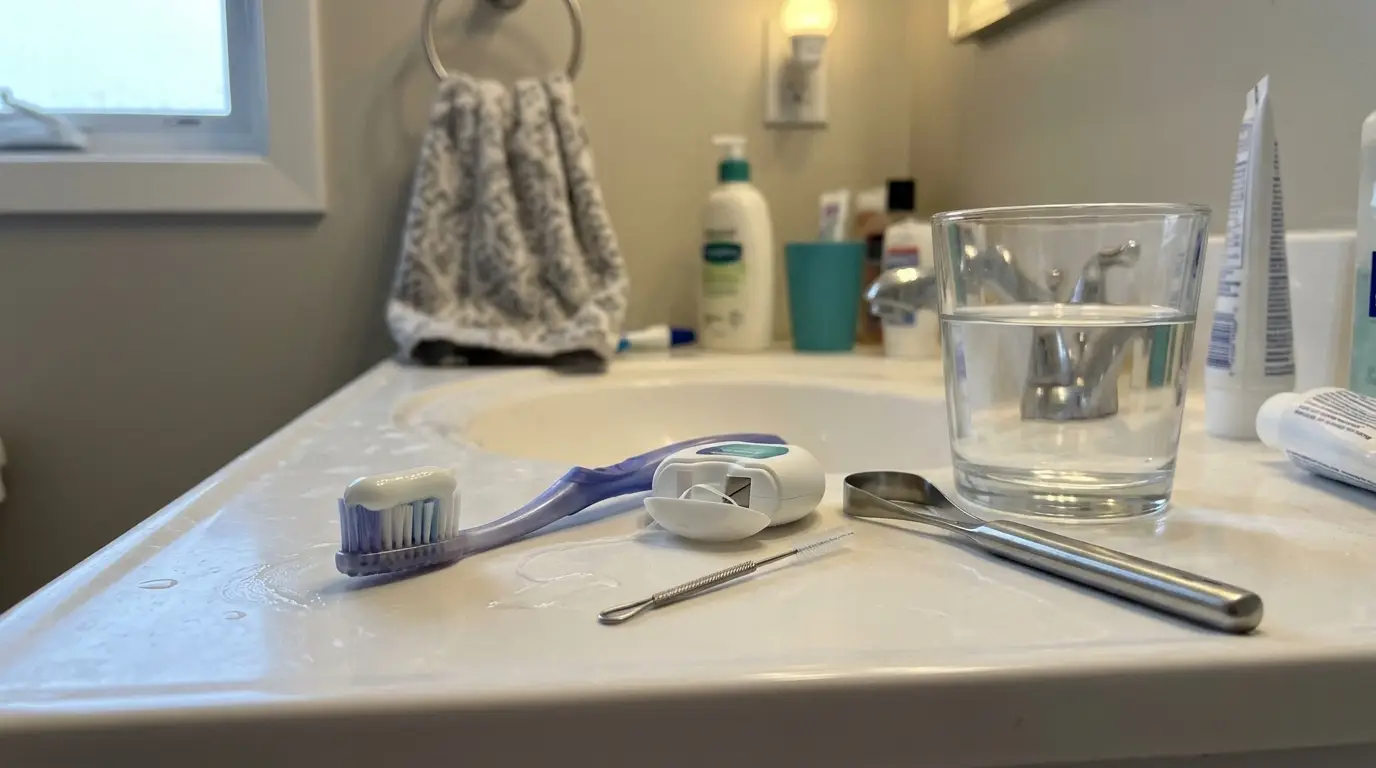
Scaling removes the tartar you already have, but it won’t stop new tartar from forming. Plaque starts hardening within days, so what you do at home between visits decides how quickly it comes back. These habits slow it down.
- Brush twice a day for two minutes: Use a soft-bristled brush and angle it towards the gumline, since that is where plaque collects and hardens. Pay extra attention to the inner surface of the lower front teeth and the outer surface of the upper back teeth, where tartar forms fastest.
- Floss or use interdental brushes daily: A toothbrush can’t clean between teeth, and that is where plaque is most often left behind. Cleaning there once a day stops it from hardening.
- Clean your tongue: The tongue holds bacteria that spread back to the teeth. A tongue scraper or the back of your brush helps reduce them and also keeps breath fresher.
- Use a tartar-control toothpaste: These toothpastes contain ingredients such as zinc citrate or pyrophosphates that slow the hardening of plaque. They help prevent new tartar, but they can’t remove tartar that has already formed.
- Add an antibacterial mouthwash if your dentist suggests it: It can reduce plaque bacteria. It works as an addition to brushing and flossing, not a replacement.
- Cut down on sugary and starchy foods: Bacteria feed on sugar and refined carbohydrates, so frequent snacking, sweets and sugary drinks speed up plaque formation. Drinking water after meals also helps rinse food particles away.
- Quit or reduce smoking, paan, gutka and tobacco: These stain the teeth and encourage tartar buildup, and they are a major risk factor for gum disease.
- Limit tea and coffee, or rinse with water afterwards: They won’t cause tartar on their own, but they stain plaque and tartar, making buildup more visible.
- Don’t skip regular dental checkups: Some people form tartar faster than others because of their saliva, diet or tooth position. Regular checkups let your dentist catch buildup early and tell you how often you need scaling.
Why Tartar Comes Back Even With Good Habits
Even with excellent brushing, some tartar can still form, especially if your saliva is rich in minerals or your teeth are crowded. That is normal. The goal of these habits is to slow tartar down and keep your gums healthy, not to avoid the dentist completely.
Common Myths About Teeth Scaling
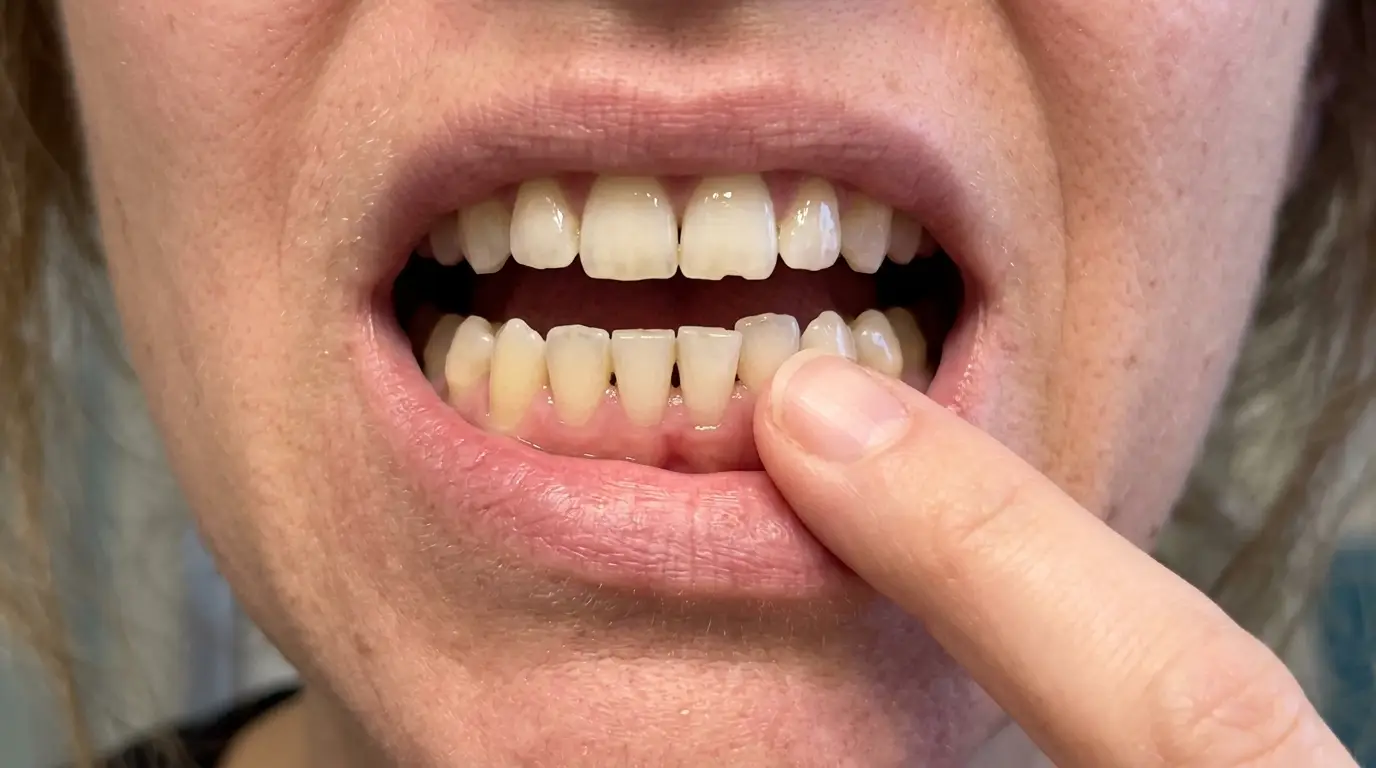
Teeth scaling is surrounded by a lot of half-truths, and many people avoid it because of them. Here are the most common myths, and what is actually true.
Myth 1: Scaling Makes Teeth Weak
Fact: Scaling does not weaken healthy teeth. It removes tartar from the surface, not enamel. Teeth that feel loose afterwards are usually already affected by gum disease, and the tartar was temporarily holding them in place.
Myth 2: Scaling Creates Gaps Between Teeth
Fact: The gaps were already there. Tartar fills the spaces between teeth, so once it is removed, the spaces become visible. The treatment doesn’t create new gaps.
Myth 3: Scaling Damages Tooth Enamel
Fact: When done by a qualified dentist with the right instruments, scaling is safe for enamel. Damage is only a risk with excessive force, unnecessary repeated scaling or untrained practitioners.
Myth 4: Scaling Is Always Very Painful
Fact: Most people feel only mild vibration, pressure or scraping. Discomfort is more likely with heavy tartar, inflamed gums or sensitive teeth, and dentists can use numbing gel or gentler scalers to make it comfortable.
Myth 5: Bleeding Gums During Scaling Means Something Went Wrong
Fact: Some bleeding is common when gums are inflamed, because tartar and bacteria have been irritating them. It usually reduces as the gums become healthier. Heavy or long-lasting bleeding is the exception and should be checked by your dentist.
Myth 6: Scaling Whitens Teeth Permanently
Fact: Scaling removes surface stains and tartar, so teeth look brighter, but it doesn’t change their natural shade. Stains can return if you smoke, chew paan or gutka, or drink a lot of tea and coffee. Only whitening makes teeth lighter than their natural colour.
Myth 7: Once Is Enough
Fact: Tartar keeps forming because plaque keeps forming. Scaling removes what is there today, but without good daily care, it comes back. Most people need it again every 6 to 12 months, depending on their gums and habits.
Myth 8: You Only Need Scaling If Your Teeth Look Dirty
Fact: Tartar can build up under the gumline where you can’t see it, and early gum disease is often painless. Bleeding gums, bad breath and swollen gums are signs you may need scaling even when your teeth look clean.
Myth 9: Brushing Harder Can Replace Scaling
Fact: Once tartar has hardened, no amount of brushing will remove it. Hard brushing can actually wear down enamel and push the gums back, which makes things worse.
Frequently Asked Questions (FAQs):
Does teeth scaling loosen teeth?
No, scaling doesn’t loosen healthy teeth. If teeth feel loose afterwards, it is usually because gum disease had already weakened the support around them, and hardened tartar was temporarily holding them in place. Your dentist can check the gum and bone health to confirm the cause.
Does scaling remove tartar completely?
Scaling removes visible tartar above the gumline and most of the deposits below it. In advanced gum disease, deeper tartar may need extra treatment such as root planing. Tartar also forms again if plaque isn’t controlled, so regular home care and checkups are needed to keep teeth clean.
Why do my gums bleed after scaling?
Gums often bleed lightly when they are inflamed, because bacteria and tartar have been irritating the tissue for a long time. This usually reduces as the gums become healthier. If bleeding is heavy, lasts more than a few days or you take blood thinners, contact your dentist.
Can scaling cure bad breath?
Scaling can fix bad breath when tartar and gum inflammation are the cause, because both trap odour-producing bacteria. It won’t help if the cause lies elsewhere, such as a coated tongue, dry mouth, tonsil problems, stomach issues or certain foods. Your dentist can help find the real source.
Can scaling reverse gum disease?
Scaling can reverse gingivitis, the early and mild stage of gum disease, when combined with good daily cleaning. Advanced gum disease (periodontitis) cannot be fully reversed, but scaling and deeper treatment can stop it from getting worse. Early treatment gives the best results.
Is teeth scaling safe during pregnancy?
Yes, scaling is generally considered safe during pregnancy, and it is often recommended because hormonal changes make gums more prone to swelling and bleeding. The second trimester is usually the most comfortable time. Always tell your dentist you are pregnant before any dental treatment.
Can children get teeth scaling?
Children can have scaling if tartar has formed, but it is less common because they usually have less buildup. A paediatric dentist will decide if it is needed and use gentle methods. Most children only need routine cleaning and good brushing guidance rather than full scaling.
Is scaling necessary if I brush twice a day?
Often yes. Brushing removes soft plaque, but it can’t remove tartar once it has hardened, and some tartar forms even in people who brush well. If your dentist finds tartar or gum inflammation, scaling is needed regardless of how carefully you brush.
Can I remove tartar at home?
No. Hardened tartar bonds firmly to teeth and can’t be safely removed with a toothbrush, scraper or home kits. Scraping at it can injure your gums and scratch enamel. Home scaling tools often cause more harm than good, so professional scaling is the safe option.
Will tartar come back faster after scaling?
No, scaling doesn’t make tartar return faster. Tartar forms again at its usual pace, depending on your brushing, diet, saliva and habits like smoking or paan. The teeth may feel smoother, so new buildup can be easier to notice, but it isn’t forming faster.
Does scaling make teeth sensitive permanently?
No, sensitivity after scaling is temporary and usually settles within a few days. It occurs because areas of the tooth that were covered by tartar are now exposed. If sensitivity is severe or lasts for weeks, your dentist should check for gum recession or other causes.
Is scaling safe for people with diabetes?
Yes, and it is often especially helpful, because people with diabetes are more prone to gum disease. Keeping blood sugar controlled and informing your dentist about your condition and medication helps keep treatment safe. Healthy gums can also make blood sugar easier to manage.
Conclusion
So, is teeth scaling good or bad? When it is done by a qualified dentist and your teeth actually need it, teeth scaling is good for your oral health. It removes the hardened tartar that brushing can’t, helps calm bleeding and swollen gums, freshens breath and lowers the risk of gum disease and tooth loss. Side effects such as temporary sensitivity or mild gum soreness are common but short-lived, and serious harm is rare when the treatment is done properly.
Remember that scaling clears the tartar you already have, while your daily habits decide how quickly it returns. Brush properly, clean between your teeth and keep up regular checkups.
Above all, don’t ignore the warning signs. Bleeding gums, persistent bad breath and visible yellow or brown buildup are your mouth’s way of asking for help, and gum disease is much easier to stop early than to treat later.
If you notice any of these signs, speak to a dentist about a professional teeth scaling service and get your gums checked before small problems turn into bigger ones.