You’ve seen it in the bathroom mirror, or felt it with your tongue: a tiny dark spot on a tooth that wasn’t there last month.
Most people do one of two things. They panic and imagine the worst, or they shrug and hope it’s just coffee. Both are guesses, and in Pakistan the odds make guessing risky. A meta-analysis of 30 studies and 27,878 people found dental caries in 56.6% of those examined, rising to 58.9% in Sindh. More than half had decay, and the spot you’re looking at could be an early sign of it.
It could also be harmless. A black spot can be a surface stain, tartar, an old filling, or a cavity, and only one of those needs a drill. The difference matters: a stain is fixed with a professional clean, but a cavity left alone can grow until it needs a crown or a root canal.
Try this 10-second check first. Run your tongue over the spot. Smooth and flat? Probably a stain. Rough, soft, or sticky, especially in a groove or between teeth? That points to decay, so book a dentist.
Here’s how to sort out the rest. We’ll cover what really turns teeth black, how to remove stains without harming your enamel, and why baby teeth, black triangles, and black gums each have their own cause and fix.
What Are The Black Spots On My Teeth
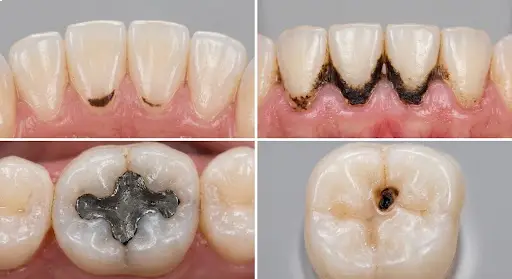
Black spots on teeth are usually one of four things: a surface stain, tartar, an old filling, or an early cavity. The quickest clue is texture. Stains tend to be smooth and uniform, while decay feels rough, uneven, or even soft and sticky.
Where you see it matters too. Decay typically hides in the pits and grooves of your back teeth or between teeth, where a toothbrush struggles to reach. Stains often sit on the inner surfaces of the upper and lower teeth, and hardened plaque (tartar) can look black right along the gumline.
| Surface stain | Cavity (decay) | |
| Feel | Smooth, flat | Rough, soft, or sticky |
| Usual spot | Inner surfaces, along the gumline | Grooves, pits, between teeth |
| Sensitivity | Usually none | Sometimes to cold or sweets |
| Fix | Professional cleaning | Filling, crown, or root canal |
No pain doesn’t mean no problem. Early cavities often cause no symptoms at all, and a dentist may only catch them at a routine check-up. A painless dark spot still deserves a look.
Two look-alikes to rule out:
- Old amalgam (silver) fillings can look black or gray, especially if you don’t remember having one.
- Dental sealants, a thin plastic coating dentists put on back teeth, can show up as a dark line.
What to do next. If the spot is smooth and has been there a while, mention it at your next cleaning. If it feels rough, sticky, or is spreading, book a visit soon. Your dentist will check it by eye and, if needed, with an X-ray to see what’s happening under the surface.
Not sure why it appeared? The next section covers why teeth turn black, from tartar and tobacco to medications and old injuries.
What Causes Teeth To Turn Black
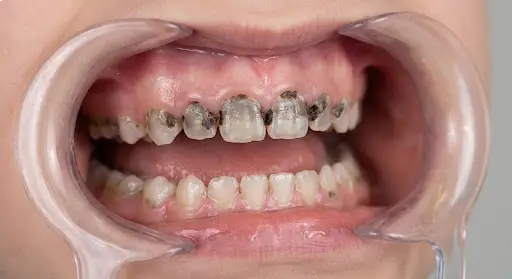
Teeth turn black when something either stains the surface or damages the tooth itself. Surface stains are cosmetic, while decay and a dying nerve get worse the longer you wait. The likely cause depends heavily on age, so start with your group.
Reasons for Babies
In a young child, the first question is: is there a hole or rough patch? If yes, think decay. If the marks are tiny dots or a thin line at the gumline, think bacteria.
- Tooth decay (most important to rule out). Sugary drinks, bedtime bottles, and missed brushing let cavities spread fast. Look for a rough spot, a visible hole, or a child who complains of pain. Untreated decay can cause pain and infection, so it needs a dentist even in baby teeth.
- Bacterial black stain (most common harmless cause). Chromogenic bacteria, mainly Actinomyces and Prevotella, react with iron in saliva and leave black dots or a thin line along the gumline. There is no hole and no pain. Brushing won’t remove it, and it often comes back after cleaning.
- Silver diamine fluoride (SDF). If your child recently had a no-drill cavity treatment, the black spot is the medicine. The silver permanently darkens the treated area.
- Injury. One tooth turning gray or black after a fall points to nerve damage.
- Liquid iron supplements. These can stain surfaces. Ask your doctor before changing any medicine.
Reasons for Adults
In adults, decay and tartar are the most common causes, followed by tobacco and food stains. Rarely, a single dark tooth means the nerve has died.
- Untreated cavities. The spot darkens and forms a hole as decay deepens.
- Tartar buildup. Hardened plaque looks black or dark brown at the gumline, and only a dental cleaning removes it.
- Tobacco. Smoking and chewing tobacco leave stubborn dark stains.
- Paan, gutka, and areca nut. Betel nut chewing stains teeth and raises decay risk.
- Coffee, tea, red wine, and cola. Their pigments build up on enamel over time.
- Old amalgam fillings. These can look black or gray.
- Injury or a dying nerve. A knock can cause bleeding inside the tooth. A dead nerve turns the tooth dark and usually needs root canal treatment or removal.
- Medications. Some antibiotics (such as tetracycline) and iron supplements can discolor teeth.
- Enamel defects. Poorly formed enamel is weaker and discolors and decays more easily.
See a dentist if the color changed suddenly, only one tooth is dark, or the spot is rough or painful.
How to Remove Black Stains from Teeth

The right way to remove a black stain depends on what’s causing it. Surface stains come off with a professional cleaning, while black spots from decay need a filling or other dental work. Brushing harder won’t fix either.
Professional treatments
- Scaling and polishing. This is the standard fix for bacterial stain, tartar, and surface staining
- Professional whitening. Dentists use it for stains from tobacco, coffee, tea, and food.
- Fillings, crowns, or root canal. If the black spot is a cavity, the decay has to be removed and the tooth restored. A dead tooth usually needs root canal treatment, and sometimes a crown.
- Veneers or internal bleaching. For deep discoloration from trauma, aging, or a non-vital tooth, dentists may bleach the tooth from the inside or cover it with a veneer or crown.
| Cause | Fix |
| Bacterial black stain | Scaling and polishing |
| Tartar | Professional cleaning |
| Tobacco, coffee, tea | Cleaning, then whitening if needed |
| Cavity | Filling, crown, or root canal |
| Dead tooth | Root canal, internal bleaching, or crown |
| Old amalgam filling | Replacement, only if you want it changed |
What you can do at home
Home care can’t remove an established black stain, but it keeps stains from coming back and protects your enamel:
- Brush twice a day with fluoride toothpaste and clean between your teeth daily.
- Use a soft brush with light pressure. Over-scrubbing is unlikely to remove the stain and can cause abrasion damage.
- Rinse with water after coffee, tea, and cola, and cut back on staining drinks.
- Quit tobacco, paan, and gutka. They are among the biggest causes of dark stains in adults.
- Consider replacing your toothbrush after a professional cleaning. Some research suggests the bacteria behind black stain may spread through saliva and shared items like toothbrushes.
Skip the DIY scrubs
Home remedies for black stains are mostly not scientifically proven, and some aren’t safe. Scrubbing hard or using abrasive pastes can wear down enamel without clearing the stain. If a spot hasn’t budged after good brushing, it needs a dentist, not a harsher recipe.
Why black stains come back
Black stains are stubborn. It often returns within a few months of cleaning, especially in children, because the bacteria that cause it are still in the mouth. The answer is regular check-ups and consistent brushing, not a single deep clean.
See a dentist if the spot is rough, sensitive, or painful, since that points to decay rather than a stain.
When to See a Dentist

See a dentist if a black spot feels rough, hurts, appeared suddenly, or keeps coming back. A smooth, painless spot that hasn’t changed in months can wait for your next check-up, but anything else shouldn’t be left to guesswork.
The texture and the speed of change tell you the most. A spot that feels rough, soft, or sticky points to decay rather than a stain, and a dark patch that is bigger than it was a month ago needs a look. Early cavities are the cheapest and simplest to fix, so a short wait can turn a small filling into a crown or a root canal. The same goes for a single tooth that turned dark, which often means an injury or a nerve problem, especially after a knock or fall. If a black stain keeps returning after cleaning, your dentist can work out why and help you keep it away.
Gums and the spaces between teeth deserve the same attention. Black triangles that are new or widening should be checked early, because gum tissue that’s been lost doesn’t grow back on its own. Dark patches on the gums, or a color change that happens quickly, are worth a visit too. Naturally dark gums are normal, but a sudden change is not. If your gums turn black or gray along with pain, bleeding, and bad breath, that can be a gum infection (trench mouth) that needs prompt treatment.
For children, book a visit if a baby tooth has a hole or a rough patch, or if one tooth darkened after a fall. Adults who chew paan, gutka, or areca nut, or who smoke, should also get checked when their teeth start darkening, so stains can be cleaned and any decay caught early.
Get seen quickly if a dark tooth comes with pain, swelling, or fever, since together these can signal infection.
Even with nothing wrong, a check-up and cleaning every six months lets your dentist remove tartar and catch cavities you can’t see. If you notice something between visits, don’t wait for the next appointment. When you go, tell your dentist when you first spotted the change, whether it hurts, and what you eat, drink, or smoke, because those details help them find the cause faster.
Tip for your visit: Tell your dentist when you first noticed the spot, whether it hurts, and what you drink, chew, or smoke. These details help them find the cause faster.
Frequently Asked Questions (FAQs)
Are black spots on teeth always cavities?
No. A black spot can be a surface stain, tartar, an old amalgam filling, or a dental sealant, as well as an early cavity. Smooth, flat spots are usually stains, while rough, soft, or sticky ones point to decay. You can’t reliably tell by eye, so have a dentist check any spot that is new or changing.
Are black spots on baby teeth dangerous?
Not always. Tiny black dots or a thin line along the gumline are usually a harmless bacterial stain with no hole and no pain. A rough patch, a hole, pain, or swelling means decay and needs a pediatric dentist. A tooth that turned black after silver diamine fluoride treatment is expected, because the silver darkens the treated area for good.
Can I remove black stains from teeth at home?
Not once they’re established. Bacterial black stain and tartar need professional scaling and polishing, and scrubbing hard at home can wear down enamel without clearing the stain. What you can do is brush twice a day with fluoride toothpaste, use a soft brush, and clean between your teeth daily to slow the stain’s return.
Can black triangles between teeth close on their own?
No. Gum tissue that has been lost doesn’t regrow without treatment, and triangles that develop gradually can keep widening if the cause isn’t addressed. Dentists can reduce them with bonding, veneers, orthodontic treatment, or gum procedures, and gentle brushing plus daily cleaning between teeth helps prevent new ones.
Why are my gums black between my teeth?
Most often it’s natural melanin, which is harmless if your gums have always been dark. Other causes include smoking, an amalgam tattoo from filling particles, certain medications, tartar with inflammation, and a gum infection (trench mouth) that brings pain, bleeding, and bad breath. See a dentist if the color changes quickly or dark patches appear.
Does paan, gutka, or smoking turn teeth black, and can it be reversed?
Yes, they stain teeth and raise the risk of decay. In a study of adult Pakistanis, betel nut chewers had a much higher risk of cavities (odds ratio 4.51). A professional cleaning can remove surface stains, and quitting stops new ones from forming. Any decay that has already developed needs a filling or other treatment.
Conclusion
A black spot on a tooth is a signal, not a verdict. It can be a harmless stain, tartar, an old filling, or the first sign of a cavity, and the quickest clue is how it feels. Smooth and flat usually means stain, while rough, soft, or sticky points to decay.
The cause decides the fix. Stains and tartar come off with a professional scaling and polish, cavities need a filling or other dental work, and no amount of hard brushing changes either. The same logic applies to the other dark spots people search for: a black stain on a child’s baby tooth is often harmless but needs checking for decay, black triangles between teeth are lost gum tissue that won’t regrow on its own, and dark gums are usually natural pigment unless the color changes fast.
What keeps you out of trouble is simple. Brush twice a day with fluoride toothpaste, clean between your teeth daily, cut back on tobacco, paan, and staining drinks, and see your dentist every six months. If a spot is rough, painful, spreading, or just won’t go away, don’t wait to see if it passes. Book a check-up today, because an early cavity is a quick fix, and a late one isn’t.